Showing posts with label cheap tricks. Show all posts

Thursday, May 14, 2026

Dirty door tricks

Doors, the lifeblood of the dungeon, or something. They show up all the time in our fantasy dungeon crawling games, yet are often underdescribed. Most of the time, it doesn't matter much. But there are a couple of question that come up during play, and you as the Referee might find yourself stuck. Quick ways to deal with this:

Which way does the door open?

Often, this is not specified neither in the key, nor the map. There are a couple of quick ways to improvize this:

  1. Towards the room with the higher number on the map… (e.g., the door between rooms #12 and #14 opens towards #14) [my preferred way]
  2. Flip a coin, roll a dice for low/high, even/odd = inward/outward
  3. Of course, if you have the time, consider what makes sense: if the dungeon builders/denizens want to barricade the door, then barricades only work in the room the door is swinging towards. If they want to rush out quickly, it's better to have the door swing outward. Etc.

The same can be done for the dreaded “where are the hinges on this door” question.

 And here's a d10 door table:

1-3 door swinging inward

4-6 door swinging outward

7 door sliding left

8 door sliding right

9 door sliding up

10 door sliding down


How hard is it to break down a door?

Breaking down a regular door takes 1 turn, via a non-modified check.

For every extra descriptor in the adventure key, breaking down the door takes +1 turn or there is an increment penalty on the check. “Wooden” does not count towards this.

So, “reinforced wooden door” = “metal door” = 2 turns/-1 on the check. “Reinforced metal door” = 3 turns/-2 on the check.


That's it, just wanted to note this stuff.


PS: a bunch of door-themed random tables over at ktrey's blog


Saturday, April 18, 2026

Take-aways from running quick pick-up games

Occasionally, when I have a free-ish evening and the urge to play, I run an impromptu pick-up game over at the OSR discord server. The first time I ran the Secret Hide-Out of Glaxorzis, that Sorcerous Creep! for a party of three players, the second time The Outpost of Stone & Silver for a single player controlling two characters, and the most recent game was a delve into A Single Tomb, Unplundered for three players. UPDATE: one of the players wrote an in-character session report!

The games were all ran on a super short notice – announced circa 30 minutes before starting time (the server has a pick-up-gamer role you can ping).

The setup is quite simple, so that we can get to the good stuff right away:

1. Searchers of the Unknown

a. Again and again, SotU proves to be the best lingua franca minimalist D&D for such quick games. If a person has played any kind of D&D, they are able to pick up right away. Of course, on the DM-side, it requires an experienced judge, who already has a bunch of rulings and tools and procedures memorized.

b. A little extra thing I introduced this time was MAGIC WORD based spellcasting. It worked quite well, although no combination spells were attempted, only single-component magics.

2. Pregens!

a. Pregens are a must for such quick games. I guess you can also do the Flailsnails thing and let the players bring in any character they want (esp. if the “setting” is kitchensink), BUT, and this is my next point:

b. PREGENS ARE THE SETTING! A lot can be conveyed about the game’s broader setting by the roster of pregens. If the pregens are “elf magic-user”, “dwarf fighter” and “human thief”, that’s a vanilla D&D sort of world. SotU doesn’t use classes, so instead I add a randomly generated two-word description to each character: “ruthless hero”, “vampiric acolyte”, “wild nymph”. They confer the vague vibe of the setting, help the players get into it + I also let them use these descriptors for in-game bonuses and in-setting knowledge. The equipment list is another setting-conferring element (“broadsword” and/or “energy rifle”? “chain armor” or “Kevlar vest”?)

c. In case of character death, left-over pregens can be used as backup.

3. Dungeon crawling (using a dungeon I already have), starting at the entrance

a. That’s where it’s at.

b. I use my own dungeons, so prep is minimal.  

4. Short session, aiming for 90 minutes (usually ends up being closer to 100-120)

a. Enough time to crawl through 4-5 rooms, have a fight, screw around with some stuff. You have to run a tight ship, sometimes cut down on random encounters to highlight the keyed stuff, but, overall, a satisfying amount of fun game stuff can happen in this timeframe.

5. Tech: Discord voice chat, tldraw for shared whiteboard 

tldraw has everything you need to quickly map stuff, record marching order, etc. Very handy tool.


Low-level games are fun. But so are mid-level games! This third time around, I went for levels 4-5 and gave the pregens more power and some cool toys. Good change of pace.


Below is how I explain the rules and the list of pregens from the third game:

Thursday, June 12, 2025

How I prep

Joining Weird Writer’s blog challenge.

So, how do I prep?

First, I stock up on weapons, ammo, first aid essentials, canned and dry goods. Next, I transport it all into my rural fenced-off compound and store it in my underground vault. Then I post a shelfie on the survivalist forums…

What?

Oh, this is about RPG referee prep.


Sure, here are a couple of disjointed ideas. I don’t have a system and, well, just don’t run games regularly enough nowadays, but when I do, I like to do as many of these as possible.

I’m only covering pre-session prep here, not campaign prep.
  • I write a lot of random game content, adventures, random tables, etc. So before a session, I check back to see if there is anything useful or relevant or something I just want to try in my archive.
  • I run 75% homebrew stuff, 25% published modules.

Notetaking, general:

  • I often make flowcharts and relationship matrices. I write out important factions, NPCs, locations, McGuffins and draw lines and arrows between them, note their relationships or connections. To me, this is the best way to organize info.
  • If the adventure has a monster summary, I print that out. If it doesn’t, I try to make one. Stats & special abilities on one page, so it’s all in one place, no need to look it up in the module or the bestiary.
  • I might do a condensed key for dungeons. But that’s pretty time consuming.
  • Print out the map separately! It also helps to annotate the map, add notes about room contents, etc.
  • I like re-drawing maps. Esp. for bigger dungeons. You memorize the layout and note interesting things for yourself, AND if you run an online game, this can double as preparing a VTT version of the map.

Pre-session prep for ongoing games:

  • Check notes, curse yourself for not taking better notes.
  • Any dangling threads or cliffhangers that require resolution or extra thought? E.g. a character was bit by a werewolf, how do we handle this, setting-wise and also rules-wise (see next section)? An enemy ran away, are there consequences? Any restocking needed Is there anything that might come back and bite the players’ ass?
  • Rules-wise, are there any complex situations that might come up? E.g. aerial combat, underwater adventuring, chases, mass combat, anything that I need to look up the rules for or make rulings on.

Pondering the moldy tomes


Tuesday, May 13, 2025

d30 generic items

I have a couple of all-purpose tables. One of them is the Amazing Inspirational Animal List (d30 animals...), which I've written about previously.

Another simple little table I always keep at hand is this list of 30 items.

For those "what's in its pocketses" situations. Players search the room/body/shelf/table, whatever, you just need something quick.
  1. Alcohol
  2. Blade
  3. Book
  4. Cards/dice
  5. Charm/talisman
  6. Coins
  7. Cosmetics
  8. Creepy
  9. Documents
  10. Drawing
  11. Figurine
  12. Fire-making device
  13. Food
  14. Handkerchief
  15. Jewelry
  16. Knick-knacks
  17. Light source
  18. Live creature
  19. Medication
  20. Mirror
  21. Musical instrument
  22. Pocket lint
  23. Poison
  24. Recreational herbs
  25. Religious item
  26. Sweets/treats
  27. Time-keeping device
  28. Tool
  29. Twine/rope
  30. Weird
This is a generic list, usable in any setting. However, it's also a cool exercise to try and come up with setting-specific reskins for all these items.

E.g., in a modern urban fantasy game, you would have

Alcohol → Fairy beer*
Card → The business card of a shady detective
Cosmetics → Vampire-attracting lipstick
...and so on.


* As elaborated during a discord convo, that's a regular IPA, but you burp rainbows after drinking it.


Monday, May 5, 2025

The Science Fantasy Frankentable

The Frankentable is an ever-growing multi-purpose random generator. 11,578 lines as of today. I’ve been maintaining and expanding it since 2020-2021, using Inspiration Pad Pro.

It’s gonzo science fantasy, sort of like Carcosa, but with even more stuff added in. I copied some stuff from my favorite PDFs and blogposts. I added tons of names from ancient civilizations. Lists of random adjectives and nouns... And wrote thousands of lines of custom content.

I love it, because it’s finetuned to how my brain works and always inspires gameable ideas... And it’s just fun adding stuff to it. I used to to run solo hexcrawls (session 1, session 2), then a randomized hexcrawl for my friends, use it all the time when I’m creating dungeons (to come up with fresh ideas), generate settlements. I used it to make pre-gens for a recent pick-up game.

Unfortunately, I cannot share it, sorry! It has copyrighted material in it alongside my own stuff. But I can only recommend creating your own Frankentable! Either as a digital tool, or, who knows, maybe as a bunch of index cards?


Just a sampling of raw results:

Seeds:

  • regular sisterhood going to polluted inn
  • android (Mawia, Sovereign of the baggy Pterodactyl-infested standing stone) telling bad news regarding lucky spaceman
  • brigand (Mardonius) and archaeologist (ruby warlock Pro-Consul) searching for runaway lover Pharadates (the vigilante)
  • cart-pusher (Urshanabi, Chief of the fountain) going to helipad
  • motley cult embarking on expedition to mist-covered stone circle


Objects:

  • stone flower
  • stone staff, imbued with the power to poison
  • oversized cape
  • fake bottle, rumored to hold the power of invincibility
  • glowing pharmacon, imbued with the power to overcome fear


Buildings:

  • narrow bakery closed
  • ancestral cairn is actually a front for something sinister (connected to hierarchic cult)
  • bustling bank under attack from monarchist herald
  • stucco-covered bakery rumored to hide secret knowledge
  • decrepit carpentry rumored to hold treasure


Locations:

  • (10 hexes west from here) windswept volcano is the hide-out of militaristic brotherhood
  • (11 hexes west from here) poisonous Sabertooth-infested castle infested with vermin
  • (14 hexes west from here) otherworldly garrison staked out by chimeric food-seller
  • (5 hexes north-west from here) bowl-shaped sierra staked out by Giant Snake
  • (3 hexes east from here) pleasent barrow hides buried treasure


Tuesday, October 17, 2023

How do I make dungeon maps? A tutorial...

People ask me from time to time about my digital dungeon drawing method. Here’s a write-up! I hope it’s useful.


The Process:
I use GIMP, which is an open-source graphic editor. Photoshop can do the same. Basically, you need any graphic software that can do layers and brushes.


I learned the basis of my approach from this video: https://www.youtube.com/watch?v=_agst3lSQ7A&ab_channel=P3RPLEX3D
P3RPLEX3D explains very well how to do basic wall outlines and fill it with a grid pattern. Thanks!

I use custom brushes for dungeon symbols. I downloaded a set from a blog many years ago, and cannot find it :( The file was shared openly, so I feel mildly comfortable including it here.

Then I add everything else on top… Here’s my process:
  1. I put on some music (“Hejira” by Joni Mitchell today)
  2. I sketch out the map on paper. This is not the final version, but it’s good to have the general layout from the start
  3. I open GIMP
  4. I already have a blank map file, so that I don’t have to go through basic setup every time. This blank has several layers:
    a. Background
    b. Dungeon wall outline
    c. Dungeon grid
    d. Symbols
    e. A group of text labels
    f. Optional layers to contain stuff like water, overlays, or cover-ups for secrets and traps if I want to create a players’ map
  5. I set the editor’s grid to 70 x 70. This is the standard scale for Roll20 digital maps, but you can use any scale you want
  6. I draw all the walls
    a. Brush size for walls is 8 pixels
    b. For built architecture, I switch on “snap to grid”. Sometimes you have to adjust the grid to 35 x 35 etc., as needed. For natural cave areas, I switch “snap to grid” off
  7. I leave gaps for doors and similar features
  8. Fill up the dungeon with the grid pattern (see the video tutorial above)
  9. Draw the rest of the fckin owl Add in symbols for doors, secret doors, traps, main room features like statues and coffins
  10. Add “indoor” cliffs, bodies of water – these all go on extra layers. The slider for layer opacity helps a LOT!
  11. Add labels and room numbers on top. I always number the rooms on my paper sketch first, and only after that add the digital labels. I use Jost, font size 54 for room numbers, 40 for smaller notes

And so on. There’s a lot of trial-and-error, janky additions and overlays, mistakes happy coincidences. But overall, this is a relatively easy method of creating usable digital dungeon maps without resorting to specialized software. And I like the flexibility it offers.

Step-by-step illustrations:

1. Sketch:

2. Digital outlines:
3. Grid fill:

4. Symbols and extra layers:
5. Labels and finishing touches:

6. TIME TO STOCK IT!

Saturday, July 29, 2023

Dirt simple 2d6 weather roll

Here's a short entry for this month's Blog Carnival: Terrain, Seasons, Weather!

By now using Reaction rolls to adjudicate, umm, everything and anything, has become an OSR staple, and I'm here for it! I think I first stumbled upon this idea over at Talysman's The Nine and Thirty Kingdoms blog. Since then, this little table has been on my DM screen/binder. 


Weather

2

Worst possible, anomalous, no travel

3-5

Very bad,
travel speed halved

6-8

Normal for season, regular travel

9-11

Advantageous, bonus travel speed

12

The best possible, bonus travel speed and morale


I like it, because it gives me a baseline, from which I can improv the actual conditions. If I'm stuck, I use the old "Dolmenwood Hex Crawl Procedure" document (no longer available on Gavin's blog, but pdf's hosted in other places are still around), which has a very nice 4xd8 table of possible seasonal weather types.


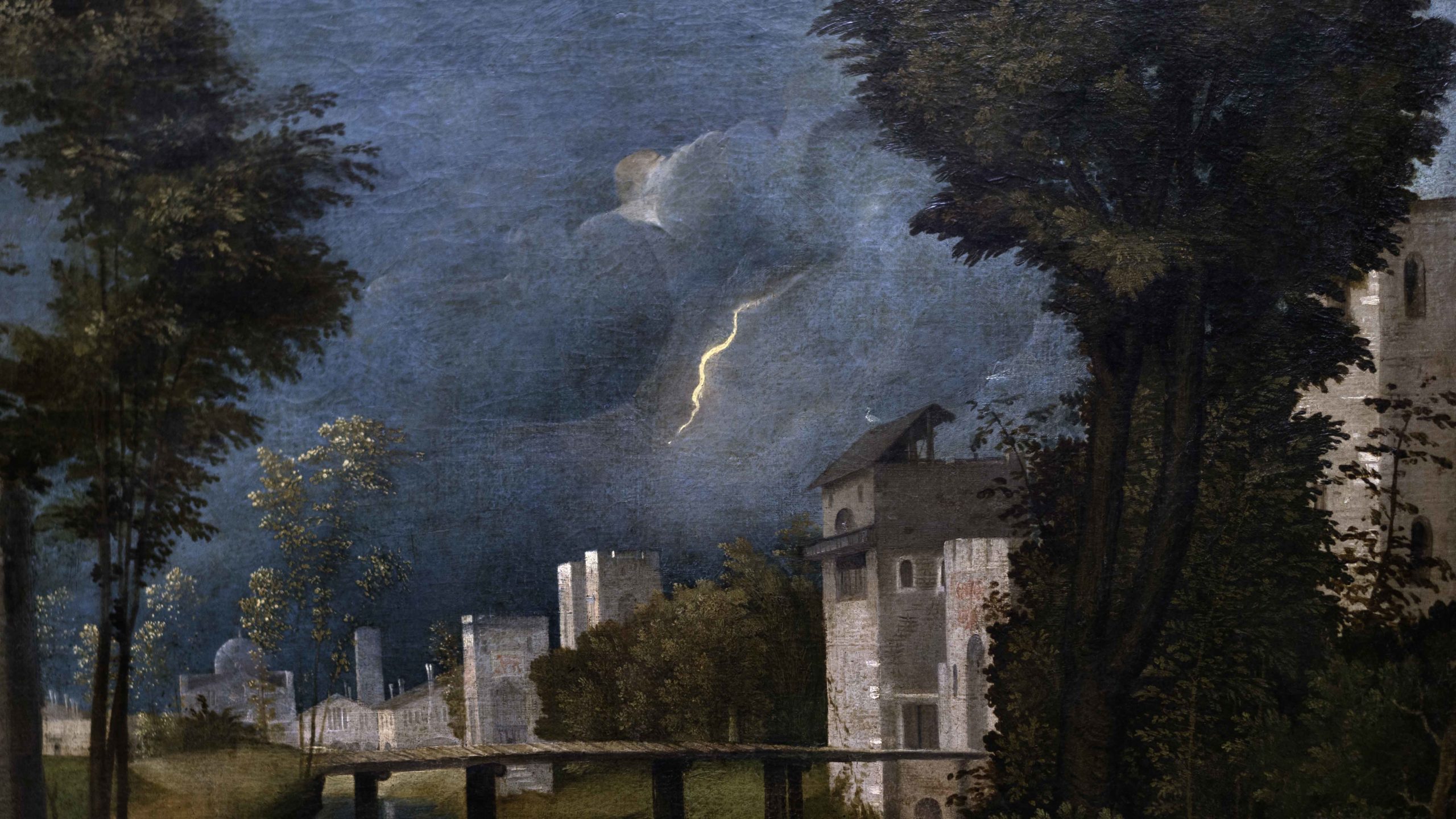
Giorgione, you rock.


Friday, October 1, 2021

The Amazing Inspirational Animal List (a cheap trick, detailed)

One of my refereeing "tricks" is to use a list of animals as an all-purpose inspirational source. I have a couple of such lists (e.g. the hybrid beast generator from The Gardens of Ynn, or the DMG) and alternate between them. But here's a consolidated d30 list. I think it has a good range, covers different types of creatures with a range of possible connotations, symbolism, powers, features, appearances, habitats...

  1. Ant
  2. Ape
  3. Bat
  4. Bear
  5. Buffalo
  6. Chameleon
  7. Crocodile
  8. Deer
  9. Eagle
  10. Eel
  11. Elephant
  12. Frog
  13. Gecko
  14. Goat
  15. Horse
  16. Jellyfish
  17. Lion
  18. Octopus
  19. Owl
  20. Peacock
  21. Porcupine
  22. Rat
  23. Salmon
  24. Scarab Beetle
  25. Shark
  26. Snake
  27. Spider
  28. Toad
  29. Vulture
  30. Wolf
And some examples, some more obvious/on-the-surface, some based on primary or secondary free associations:
  • NPC quirk: relies heavily on body language (Ape), always in motion (Shark), sniffs and snorts (Porcupine)
  • NPC behavior: controls a lot of pawns (Octopus), lounges while others do the hard lifting (Lion), creates very symmetrical art (Spider)
  • Monster power add-on: scaly armor (Crocodile), see in the dark (Owl), camouflage (Chameleon), hive mind (Ant), long jump (Frog)
  • Hybrid beast: a flying monster that creates cloud-like webs (Eagle + Spider), giant ape with paralyzing tentacles (Ape + Jellyfish), nocturnal toad with big creepy eyes (Owl + Frog)
  • Object: ivory comb (Elephant), bat-shaped belt buckle (Bat), soft transparent acid sack that explodes on impact (Jellyfish), shaggy hat (Buffalo), net coated with poison (Spider), chitinous helmet (Ant), coat-of-arms: three stylized golden horns on a green field (Goat)
  • Spell ingredient: giant spider eggs (Spider), last breath of a wolf (Wolf), peacock feathers, one of each pattern (Peacock), blood of a person gorged by deer antlers (Deer)
  • Location: Quill Canyon (Porcupine), The Webbed Forest (Spider), Bat Hill (Bat), Rainbow Bridge (Peacock), Twisting River (Snake), Eagle Creek (Eagle), Brass Tower (Scarab Beetle), Phantrin (Elephant), Shimmering Sewers (Rat + Peacock)

Die drop table!


Tuesday, September 28, 2021

Ten more cheap tricks for Referees

It's not a bandwagon, it a stagecoach of fun and sharing! Phlox started it, with these cheap tricks, and there are already many more, so here's my list:
  1. A list of twenty animals is a great all-purpose random generator. I use it to quickly generate random NPC quirks or appearance (fidgety like a mouse / proud like an eagle / lion-maned / walks like an elephant), generate random mutations or powers (acquire tiger stripes / wolf fangs / octopus tentacles), roll twice or thrice for chimeric monsters (antlered snake / winged bear thing / lizard-scaled chicken that hides in a snail shell), create a place name (Fox River / Gerbil Mountain), random visual details (lion-shaped knocker / snake-shaped dagger), spell ingredients (eyes of bat / scales of catfish) and so much more.
    Edit: here's my list.
  2. An oldie but goodie: have a list of names. I’m bad at coming up with names on the spot. Do not just cross off the ones you use: make a not next to them about who is called this way (“Wank Hilliams – blacksmith the players are super obsessed with for some reason; snake-like in appearance”).
  3. Ask the spellcaster what their Magic Missile spell looks like. Is it a purple flash of lightning? Is it a tornado of teeth? Does it leave behind the smell of sulfur, ozone, or rosewater?
  4. Little dream sequences for characters can be fun (“I can say it again: ‘Some ideas arrive in the form of a dream’”). Especially lucid dreams. Recurring lucid dreams, where the character explores something step by step is also cool, but maybe it’s too much spotlight on just one person.
  5. Create quick maps by taking an existing place, rotate it by 90°, stretch in one direction by 150%, done (very good for natural looking coastlines).
  6. “I owe you one” is one of the best rewards an NPC can give to players.
  7. Describe food a bit, even if it’s just a simple tavern meal or some campfire cookery. Tubers, roots, mushrooms and wild herbs make for great detail. A meal with an unusual ingredient can be like a rumor or hook (“yeah, we use this herb to flavor our food, but some say it can also cure blindness”).
  8. Keep a commonplace book, record miscellaneous ideas and shower thoughts, plots from stories, interesting images, anything. If you number the entries, it is also a random table…
  9. The 2d6 reaction roll/morale check is one of the greatest tools given to humankind. I use it for all “psychological” things: does the guard fall for the player character’s lies ? Is the captive intimidated by the threats?
  10. https://relatedwords.org/ and https://describingwords.io/ are pretty useful resources!

* I was asked about how I adjudicate the reaction roll for deception. These are my guidelines:
2 - NPC absolutely does not believe the lie, either sees through the lie or just gets upset and hostile
3-5 - NPC does not believe the lie, and probably knows that the character tried to lie
6-8 - NPC is indifferent, might try to seek out confirmation or denial of the fact lied about
9-11 - NPC believes the lie, accepts it as fact
12 - NPC believes the lie completely, and might even change their initial opinion on the matter (esp. if the roll goes over 12)
Bonuses/penalties might apply (for outstanding Charisma score, or the way the players are describing their lie).